Navigating the Lateral Interview


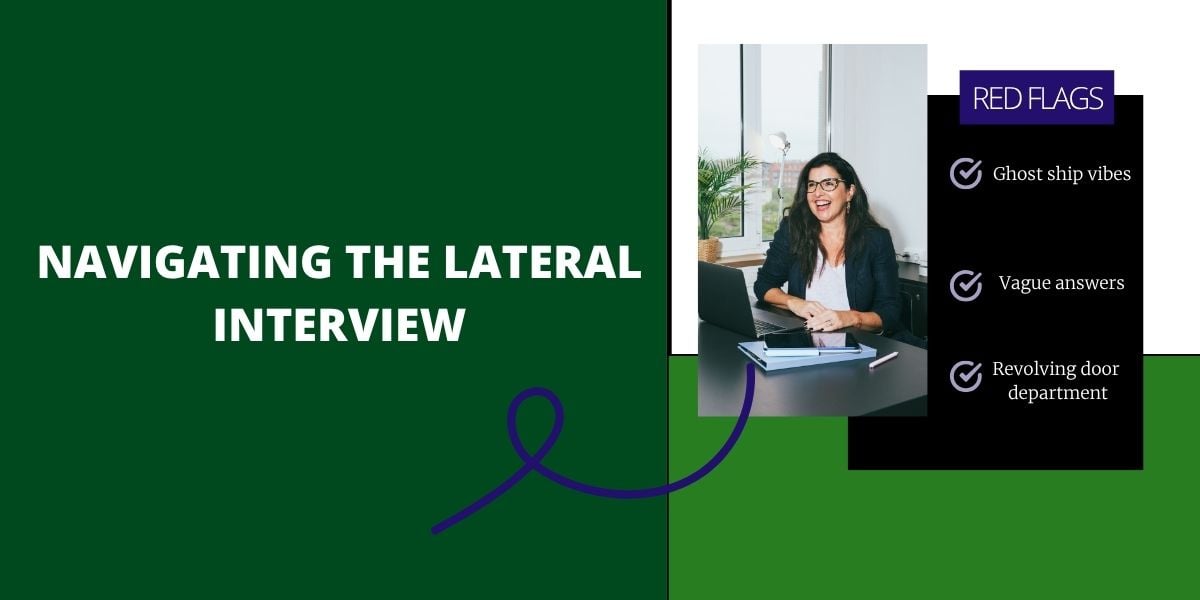
The lateral interview—where an experienced attorney moves from one firm to another—is a high stakes first date where one or both parties may be trying to hide their messy closets. While the firm is busy vetting your portable book of business or your technical precision, you need to be hunting for potential cracks in their culture. Transitioning is too much work to end up in a same firm, different letterhead situation. Here is your red flag checklist for navigating the lateral gauntlet.
1. The Ghost Ship Vibe
If you walk through the halls or observe the backgrounds on Zoom and the energy feels drained, you should pay close attention. A major red flag occurs when nobody is smiling or nobody is present despite a claim of a robust office culture. You might ask how the team dynamic has changed since the transition to hybrid work. If the associates look like they are in a hostage video, no amount of signing bonus will make the 2,200 hour requirement feel sustainable.
2. Vague Answers on Origination and Compensation
For laterals, the black box compensation model is a minefield. A red flag appears when you ask how credit is shared or how the bonus structure is calculated and they give discretionary or holistic as their only answers. You should ask them to walk you through a specific example of how origination credit was split on a recent multi-disciplinary matter. You do not want to find out in December that the Senior Partner takes 100 percent of the credit for work you brought in and executed.
3. The Revolving Door Department
If the firm is hiring for the same lateral position they filled fourteen months ago, you must proceed with extreme caution. A lack of associates or counsel in the four to six year seniority range is a significant warning sign. You can check LinkedIn for past employees in that specific practice group and ask what happened to the last person in this role. High mid-level attrition usually points to a bottleneck partner who is impossible to work for.
4. Lack of a Strategic Why
A firm should know exactly why they need you specifically. A red flag exists if they just need a body to bill hours because they are underwater. Ask where they see this practice group in three years and how this lateral hire facilitates that goal. If there is no plan for your integration, you will be treated as an expensive contractor rather than a future partner.
The best intel often comes from the associates. If the partners do not let you interview with the associates you will actually be working with, that is not just a red flag but a siren.
Are you looking for a lateral move because of something about your current firm, or are you primarily chasing a step up in prestige and pay?