Dietitian vs. Nutritionist: What’s the Real Difference?


The short answer: All Registered Dietitians are nutritionists, but not all nutritionists are Registered Dietitians. The primary difference lies in regulation, education, and clinical authority. A Registered Dietitian (RD/RDN) is a legally protected title for a healthcare professional authorized to provide Medical Nutrition Therapy (MNT), whereas "Nutritionist" is a broader, often unregulated term used for general wellness advice.
Dietitian (Registered Dietitian/RDN)
Breakdown of the Profession:
A Dietitian (also known as a Registered Dietitian Nutritionist or RDN) is a highly qualified and trained healthcare professional who specializes in the field of nutrition and dietetics. They are experts in using food and nutrition to promote health and manage disease.
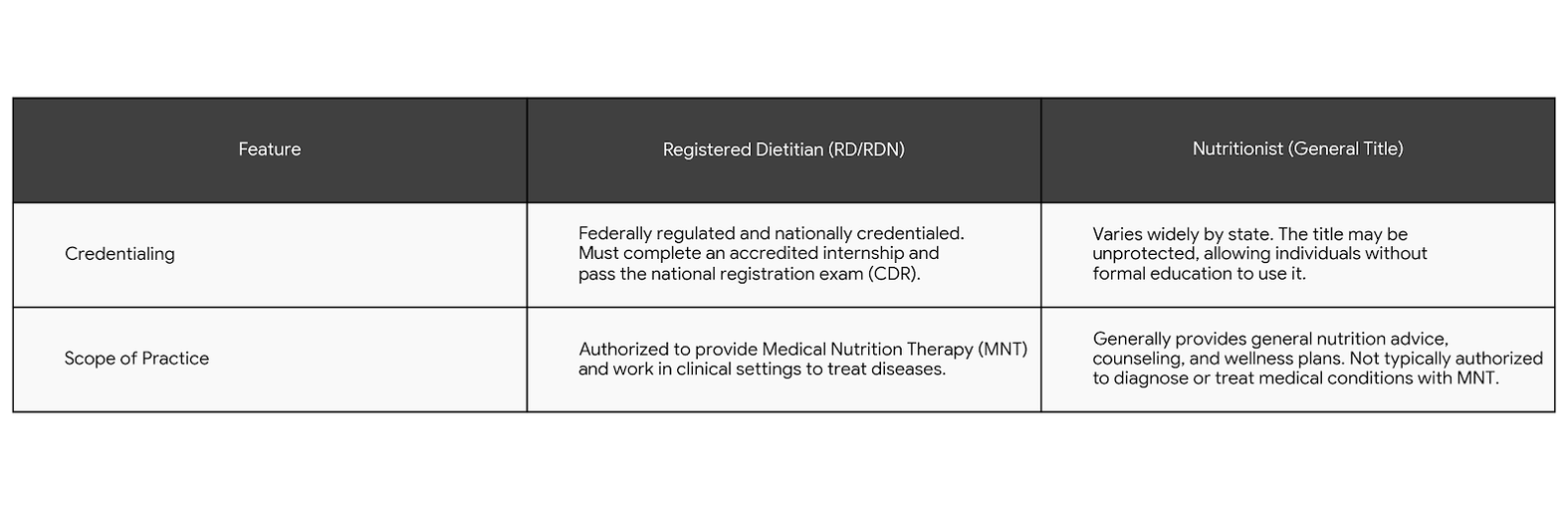
- Role & Scope: A Dietitian's primary role is to assess, diagnose, and treat dietary and nutritional problems. They are critical members of a healthcare team, working in clinical settings like hospitals, long-term care facilities, and outpatient clinics. They develop and implement evidence-based, personalized nutrition care plans, including Medical Nutrition Therapy, to manage chronic conditions like diabetes and heart disease, or to aid recovery from surgery or illness.
- Education & Credentialing: Becoming a Dietitian requires a rigorous path that includes:
- Earning a bachelor's degree in dietetics, nutrition, or a related field from an accredited program.
- Completing a supervised practice program, typically in the form of an accredited dietetic internship.
- Passing a national registration examination (such as the one administered by the Commission on Dietetic Registration, or CDR) to earn the protected credential of Registered Dietitian (RD) or Registered Dietitian Nutritionist (RDN).
Nutritionist
Breakdown of the Profession:
A Nutritionist is a professional who specializes in the study of food and nutrition. They use their knowledge to help individuals, groups, and communities make informed decisions about their dietary needs and improve their overall health.
- Role & Scope: Nutritionists work with clients to assess their dietary needs, develop personalized nutrition plans, and provide counseling and education on healthy eating habits, disease prevention, and weight management. They may work in a variety of settings, including schools, corporate wellness programs, research institutions, or private practice.
- Education & Credentialing: The education of a Nutritionist typically includes earning a bachelor's degree in nutrition or a related field. Unlike a Registered Dietitian, the general title "Nutritionist" is not uniformly regulated by a national examination or required internship. This means the specific qualifications can vary widely by individual and state. (Note: Some professionals may use specialized titles like "Clinical Nutritionist," which requires deeper knowledge and often an advanced degree to tailor interventions for specific medical conditions, but this is still separate from the RDN credential.
The Key Difference
The difference is rooted in the standardization and legal protection of the title:
Have you thought about exploring these careers? Let us know in the comments, and be sure to check out our Career Guides to explore even more career options!