Building Your Professional Circle: Why Pre-Med Networking Starts Now

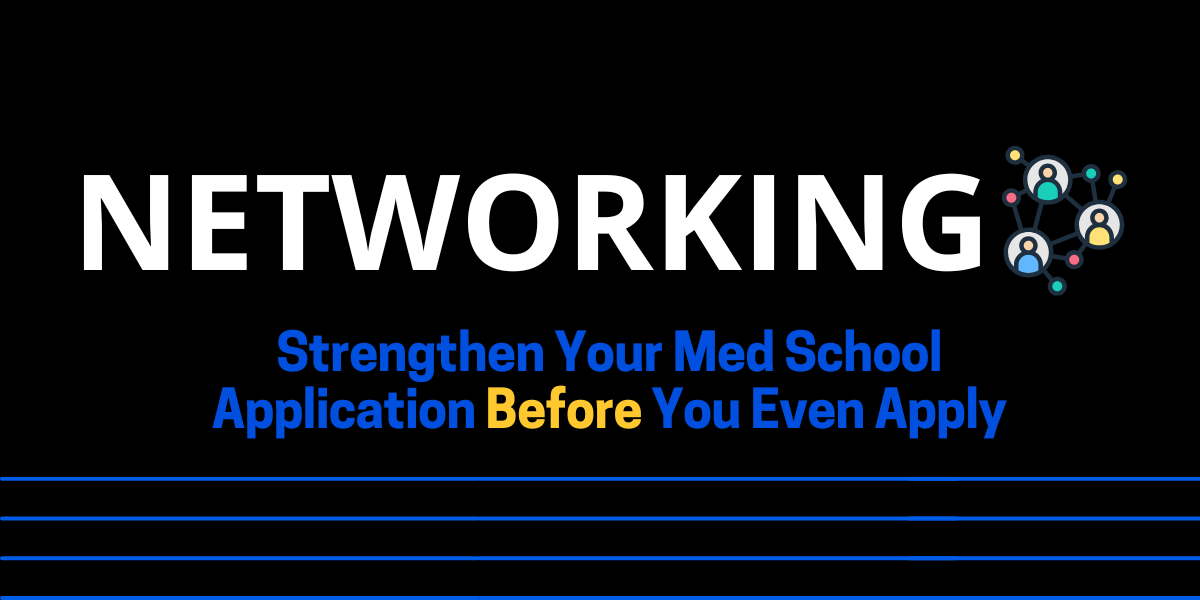
For many med school applicants, the focus is internal: hitting a specific MCAT score, maintaining a high GPA, and refining a personal statement. While these are critical benchmarks, an often overlooked component of a successful application is the strength of your professional network. Networking as a pre-med is about building relationships with mentors, clinicians, and researchers who can provide the insight and advocacy needed to navigate a competitive admissions landscape.
Starting this process early ensures that by the time you hit "submit" on your application, you have a support system of professionals who can vouch for your character and readiness.💯
Strategic Networking Channels for Pre-Meds
Networking doesn't always happen at formal events. For a pre-med student, it often occurs in the environments where you are already spending your time.
- Research Labs: Don’t just perform the protocols. Engage with the Principal Investigator (PI) or the post-docs. Ask about the "why" behind the study and its clinical implications. These individuals often have deep ties to academic medicine and can offer guidance on MD/PhD paths or research-heavy programs.
- Volunteering and Clinical Work: Whether you are scribing or volunteering in a free clinic, the residents and attending physicians you work with are your best resources for understanding the current state of medical education.
- Alumni Networks: Your undergraduate institution likely has an alumni database. Reaching out to former students who are currently in medical school or residency can provide "insider" knowledge about specific programs that you won't find on a website.
The Anatomy of a Meaningful Connection
A successful professional relationship is built on two things: consistency and value.
Approach | Actionable Step | The Result |
|---|---|---|
The Cold Outreach | Send a brief, professional email asking for a 15-minute "informational interview" regarding their specialty. | A low-pressure way to gain a mentor and expand your perspective. |
The "Update" Email | Every 4–6 months, send a brief update to former mentors about your progress (e.g., "I just finished my semester and thought of our conversation regarding..."). | Keeps you on their radar so they are ready to write a letter when the time comes. |
The Professional Ask | When requesting a Letter of Evaluation, provide your CV and a draft of your personal statement. | Demonstrates respect for their time and helps them write a more detailed, supportive letter. |
Why It Matters for Your Application
Admissions committees look for evidence that you understand the reality of the profession. When your application is supported by letters from people who have mentored you for years, it carries a level of credibility that a high test score alone cannot provide. Networking provides you with "sponsors"—people who will mention your name in rooms you haven't entered yet.
How Are You Connecting? 🤝
Networking can feel like an extra task on an already full plate, but it’s often the differentiator between a good application and a great one.
Have you ever reached out to a professional in the medical field for an informational interview or advice? If so, what was the most helpful piece of insight they shared?
If you're nervous about reaching out, what is the biggest question holding you back?
Share your experiences or questions below! Let's help each other bridge the gap between student and professional.