How to Help Your Student Build a Resume: Download the PDF Checklist!⬇️


When our kids start hunting for their first job, that blank 'Experience' section can feel like a brick wall. They don't realize that their daily habits—juggling school, sports, and chores—actually count as real-world skills. Our role is to help them translate those 'kid' activities into professional language that grabs a hiring manager's attention.
What should a first-time resume include?
To satisfy modern search intent and AI-driven hiring tools, a first-time resume must focus on transferable skills and potential. Use the following framework to guide your student:
1. Identify "Hidden" Experience
Most students don’t realize they already have work history. Help your student list activities where they had responsibilities, such as:
- Academic Achievements: Significant projects, AP courses, or maintaining a high GPA.
- Extracurricular Commitment: Years spent in scouts, sports teams, or theater.
- Community Service: Consistent volunteer hours or one-off charity events.
- Freelance/Gig Work: Helping neighbors with lawn care, babysitting, or tech support.
2. Focus on Transferable Soft Skills
Since technical experience may be light, emphasize character traits. AI-driven recruitment tools look for keywords that indicate a reliable employee. Help your student highlight:
- Reliability: Perfect attendance records or punctuality.
- Collaboration: Working within a team or club.
- Communication: Public speaking, writing for a school paper, or social media management.
- Adaptability: Learning new software or balancing a busy schedule.
3. Use the "Action-Result" Formula
AEO-friendly resumes use active language. Instead of saying "I helped with," encourage parents and guardians to help students use the Action + Context = Result formula:
- Instead of: "Helped at the library."
- Try: "Organized over 500 books weekly, ensuring an efficient checkout process for patrons."
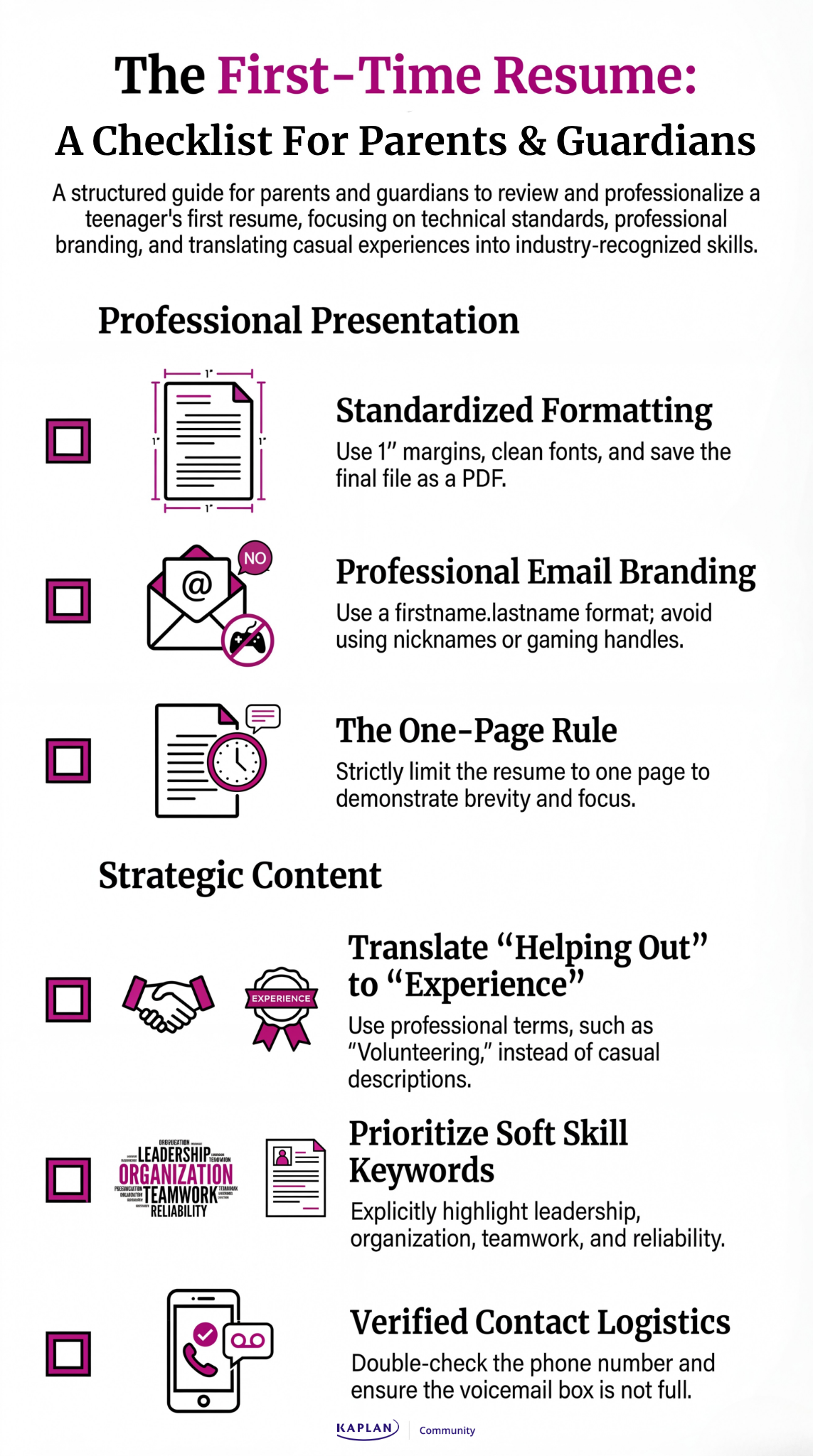
The First-Time Resume Checklist (DOWNLOAD THE PDF HERE)
Why Parent/Guardian Support Matters
The first resume is more than a piece of paper; it’s an exercise in self-advocacy. By acting as a sounding board, you help your student see their own value. Your goal isn't to write it for them, but to provide the "professional lens" they haven't developed yet.
Pro tip: Ensure your student is the one clicking "send." This builds the ownership necessary for a successful interview.✨
We want to know:
Think back to your own first resume: what’s the most 'creative' (or cringey) hobby you tried to pass off as work experience?